


Parking & Curb Management
The availability and cost of parking influence how millions of residents and workers decide to get around the Bay Area, including how much they drive. MTC provides technical assistance and grants to help local governments update parking and curb policies and implement programs to achieve local and regional goals.
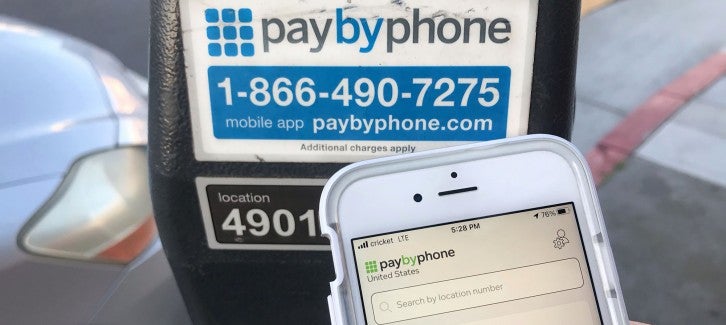
Photo by Mike Jensen
Local parking policies have a major impact on communities and the environment, and play a role in the cost of housing and commercial development and how land is used.
MTC is helping local governments plan for current and future parking needs that are balanced against other demands and uses, such as housing, transit and bike lanes, goods delivery and parklets.
Better Parking Policies
To make sure cities and counties have parking policies that better align with environmental, social and equity priorities, MTC supports local governments as they create policies and programs to better manage the supply and demand for parking by:
- Funding parking studies in Priority Development Areas
- Developing planning resources to improve local parking policies, including the Parking Policy Playbook
- Sponsoring parking workshops for local governments
Technical Assistance
Visit the Technical Assistance Portal for additional parking resources.
Staff Contact
Joel Mandella, Transportation/Climate Planner
Email: jmandella@bayareametro.gov
This toolkit of resources helps city and county staff develop and implement parking policies and programs that make the most sense for their community, and address some of the challenges of policy change.

A practical, action‑oriented resource for deploying the Mobility Data Specification and Curb Data Specification to manage mobility services and curb assets across the public right‑of‑way.

While often offered for free to drivers, parking and the cars associated with using it impose many costs on everyone. Parking is associated with higher rates of driving — and increased emissions, traffic, and safety impacts that come along with more cars on the road.
Parking is also expensive to provide, typically costing tens of thousands of dollars per parking spot. These costs are passed along to owners and tenants of developments with parking facilities, typically whether or not they own cars.
Additionally, parking takes up valuable space and money that could be used for other critical needs in the region, including for affordable housing. Policies that require the overdevelopment of parking disproportionately impact lower-income residents — they tend to own fewer cars, but often still have to pay these costs.
MTC developed a Smart Parking Handbook to help local governments better manage parking supply and demand in their jurisdictions. The Handbook describes different types of parking policies, local examples and where and how to implement them.
MTC is developing a new toolkit to update the guidance and examples, and to provide targeted resources that will support the implementation of new and updated parking policies. These resources will be accompanied by workshops and other education opportunities.
In 2014, MTC led a two-year Value Pricing Pilot to critically assess the relationship between parking pricing, policies, and supply and demand in 25 locations around the Bay Area.
- Download the Value Pricing Pilot Expert Panel Presentation
- Download the Value Pricing Pilot Regional Analysis
The case studies, academic research, policy analysis and data analysis revealed these key findings:
- Most locations studied have a lot of unused parking, even during peak-use periods
- Many locations don't have pricing policies that effectively balance parking demand across the neighborhood
- There is a lack of coordination in pricing between on-street and off-street parking
- Many parking requirements are not closely aligned with demand of the local population
- When transit projects include parking garages, alternate transportation modes, and the related cost and effectiveness of pricing are often overlooked
- Employee programs that charge for parking are most effective in reducing driving
- Regional parking policies can support the Sustainable Communities Strategy as part of the state-mandated regional transportation plan, called Plan Bay Area